Spinal connections & Tao Somatics
Physical connections, simply explained
Spinal nerves carry messages between the brain and the body. These broad pathways help us understand how different areas are connected.
- Cervical nerves · Neck
- Neck, shoulders, arms & hands
- Thoracic nerves · Mid-back
- Chest, ribs & abdominal wall
- Lumbar nerves · Lower back
- Hips, front of the thighs, knees & parts of the lower legs and feet
- Sacral nerves · Pelvic region
- Buttocks, backs of the legs & parts of the feet and toes
These areas overlap. The labels describe nerve pathways, rather than a single bone controlling a painful area. Foot and toe connections involve both lumbar and sacral nerve roots.
For example: a painful knee
With a painful knee or hip, we explore the area itself, nearby joints, foot support, and how you stand and walk. Knee pain can sometimes be referred from the hip or lower back. We also notice how discomfort affects your confidence, emotions, and sense of vitality — and what helps you feel more supported.
Body, emotion & energy: working both ways
Pain can influence your mood, confidence, and willingness to move. Stress and worry can also influence breathing, muscle tension, and the experience of pain.
In my Tao Somatics approach, I also work with the energy body: the Daoist framework of Qi, meridians, and Dantians. We may begin with movement and notice emotional or energetic shifts, or begin with breath, sound, imagery, and intention and notice how your body responds.
For knee or hip discomfort, this may include exploring grounding, support, and trust in movement. Your own experience guides us; we do not assign a fixed emotion to a painful joint.
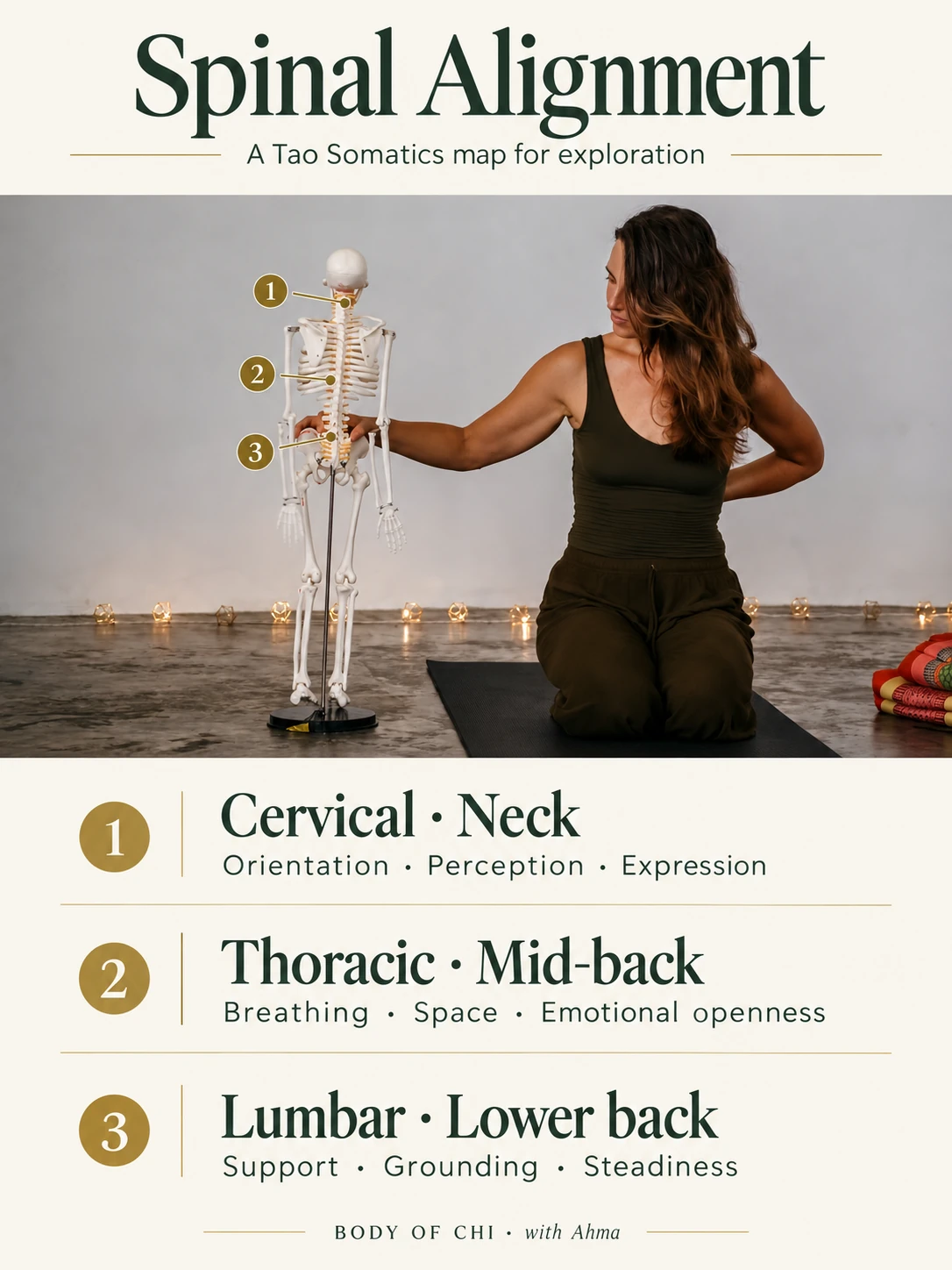 Explore our illustrated spinal map ↗Body awareness, emotional reflection & Daoist practice.
From observation to personalised support
Your history, comfortable movement, and response guide the session. We may combine targeted movement and breath with gentle fascia and lymphatic techniques in person, and sound or vibration practices where appropriate. The aim is greater comfort, ease of movement, and more balanced support through the body, alongside any medical care you need.
Another reference: the Dorn Method
The Dorn Method offers an experiential map of relationships between the spine and other areas of the body. Two examples from its chart:
- L3 · Lower back
- Knee
- Sacrum · Base of the spine
- Legs & feet
These associations can offer starting points for exploration alongside your history, movement, and response. They do not establish the cause of pain or replace an individual assessment.
The Dorn source describes its chart as an experiential reference, rather than a proven medical anatomy chart. Explore the original Dorn reference ↗
Anatomy & physical pain background
MSD Manual · Spinal nerve pathways
NHS · Knee pain and contributing factors
NHS · Pain, emotions & breathing
Explore the Tao Somatics reflection map
A second layer: movement, seasonal qualities, and emotional reflection.
These themes come from Ahma’s Seasonal Spinal Alignment teaching framework. They are prompts for personal reflection, not medical diagnoses or proven links between a vertebra and an emotion.